
Termite Inspection and Treatment
Subterranean termites reach a slab house from the soil. The signs are small, and the treatment depends on where they come in.
How Termites Get Into a Slab House
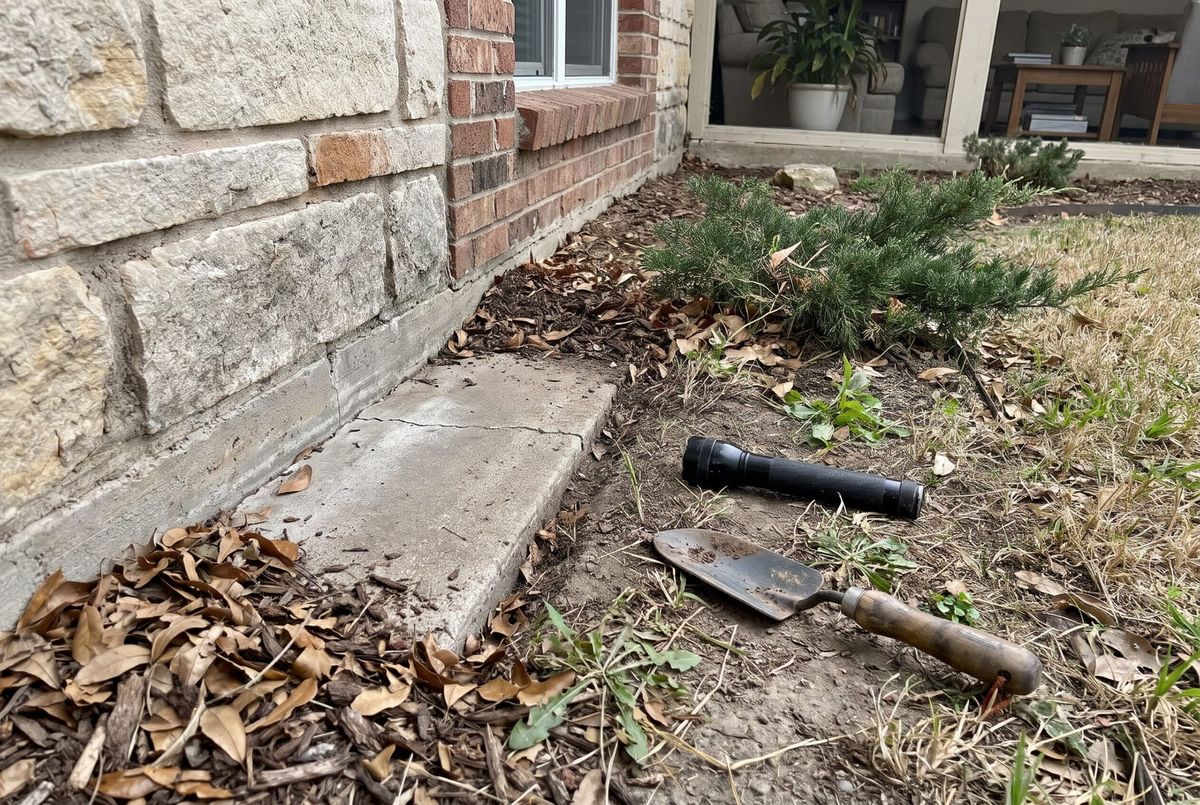
The termites found in most homes here are subterranean. The colony lives in the ground, needs the moisture of the soil, and sends workers up to wood through mud tubes about as wide as a pencil. Concrete does not keep them out. They need a gap no wider than a credit card’s edge, and a slab has several: expansion joints, the openings around pipes, hairline cracks, and the space behind brick where it meets the foundation.
Garland’s clay makes those gaps worse. It swells after rain and shrinks through a dry summer, and that movement opens cracks along the slab edge and pulls soil back from the wall. Swarms follow the same weather: in spring, usually on a warm day after rain, a mature colony sends out winged termites to start new ones.
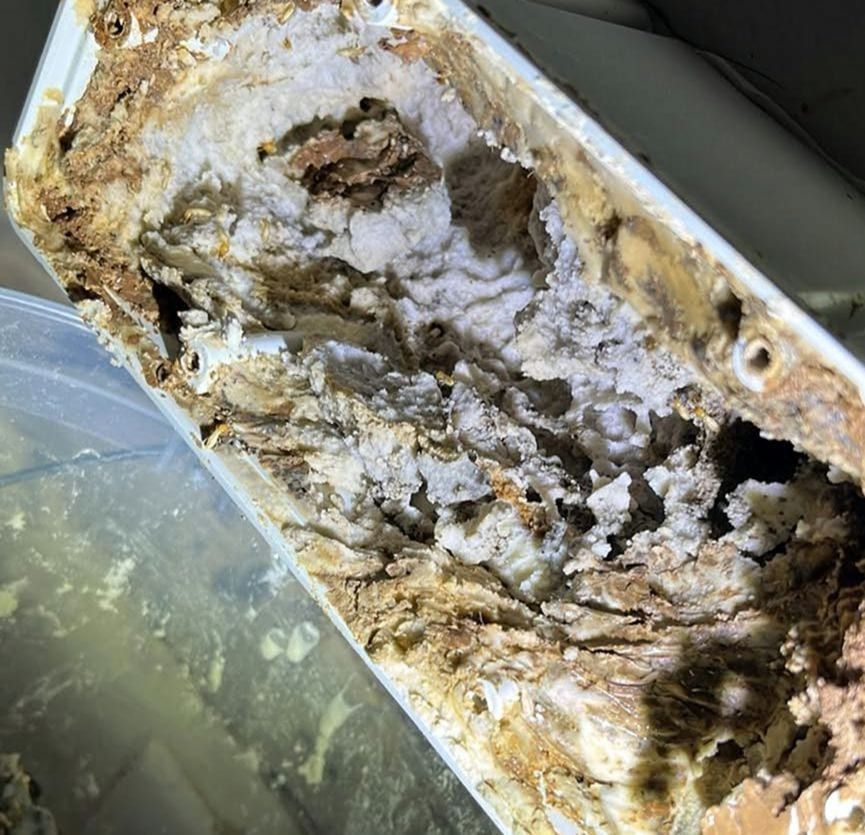
Because workers stay inside wood, soil or their tubes, most people never see one. What they see is mud, wings, or trim that gives way under a thumb.
Signs and Meaning
| Sign | What it usually means | Next step |
|---|---|---|
| Mud tubes on the slab, brick or garage wall | A travel route from soil to wood, used now or in the past | Break a short piece from one and look again in a few days; leave the rest |
| Winged insects at a window | A swarm from a colony in or close to the house | Save several in a bag and note the date and room |
| A pile of wings on a sill or floor | Swarmers have already paired off and dropped their wings | Check the nearest wall, bath trap and door frame |
| Trim that sounds hollow or paint that ripples | Galleries just under the surface | Press gently; do not pull the wood off |
| Pinholes in drywall with a dab of dirt | Workers came through the paper from the wall cavity | Circle them in pencil so new ones stand out |
| Soft wood under a leaking sill or tub | Moisture, with or without termites | Fix the leak and have the wood looked at |
Termite or Flying Ant Checker
Look closely at one insect, or at its wings, and answer what you can.
Choose an answer for at least one question, then press the button.
What a Termite Visit Includes
Pest Control- Slab Edge and Garage
The foundation line outside, then the bare concrete and sill along the garage walls.
- Plumbing Walls
Bath traps, the water heater closet and under sinks, where pipes pass through the slab.
- Doors, Windows and Trim
Baseboards, jambs and sills, tapped and probed where they sound thin.
- Yard and Fence Line
Stumps, mulch, firewood and posts that touch the ground near the house.
- Before We Leave
A second look at each entry point, and what to watch for at those spots.
Treatment Approaches
Treatment follows the inspection. The same house may need one approach at the garage and another under a bath, and the product label sets how each is applied.
| Approach | How it works | Best suited to |
|---|---|---|
| Liquid soil treatment | A termiticide goes into a trench along the foundation and through small holes drilled where concrete meets the wall, leaving a treated zone termites pass through | Active tubes along the slab, or a house with soil open on most sides |
| Bait stations in the ground | Stations set around the house are checked on a schedule; workers carry bait back to the colony | Yards where trenching is hard, or where drilling finished floors is not wanted |
| Foam or dust into wood | Product is placed into galleries and wall voids through small openings | A single door frame, sill or patch of trim |
| Spot treatment at plumbing | The soil around a bath trap or pipe opening is treated from inside | Tubes that appear only in one bath or closet |
| Moisture and contact changes | Leaks repaired, mulch pulled back, wood lifted off the soil | Every house, alongside any of the above |
Before the Inspection Visit
- Clear a path along garage walls and empty the floor of closets on outside walls.
- Note where mud tubes are and the dates of any swarm.
- List past water leaks, even ones that were repaired.
- Unlock the attic, and the crawl access if part of the house has one.
Swarms and Damaged Wood
Does a swarm indoors mean the house has termites?
Usually, yes. Swarmers fly poorly and drop their wings close to where they came out, so a pile of wings inside points to a colony under or beside the house. Swarmers outdoors, rising from a stump or fence post, are a reason to check but not proof.
How can I tell whether wood damage is active?
Look for moisture and for change. Fresh tubes are damp and are rebuilt within days of being opened; old ones crumble and stay open. Live workers are pale and soft. Damage on its own says only that termites were there once, which is why dates and earlier treatment records help.
We have a brick house. Does it still matter?
Brick here is a veneer over wood framing, with weep holes along the bottom course. Termites use the gap behind it without touching the brick at all.