
What We Check
How a visit goes, what is looked at for each kind of pest, and the rules that apply to the work.
From the First Look to the Last
A visit begins with the reason pests are in the building. Treating only what shows tends to bring the same call back.
- Assessment. You show where you have seen activity. The house is walked inside and out for the gap under a door, the damp spot behind a water heater, a dryer vent with a loose screen, or droppings along an attic wall.
- Options. What was found is explained, along with the treatments that fit it and what each asks of the household. A single visit and recurring service are both possible.
- The work. Bait, spray, traps or sealing go where the activity is, and the cause is dealt with in the same round where it can be.
- Checking results. The property is walked again before the job is called finished. Entry points are rechecked, bait and traps are confirmed to sit where the activity was, and you hear what to watch for.
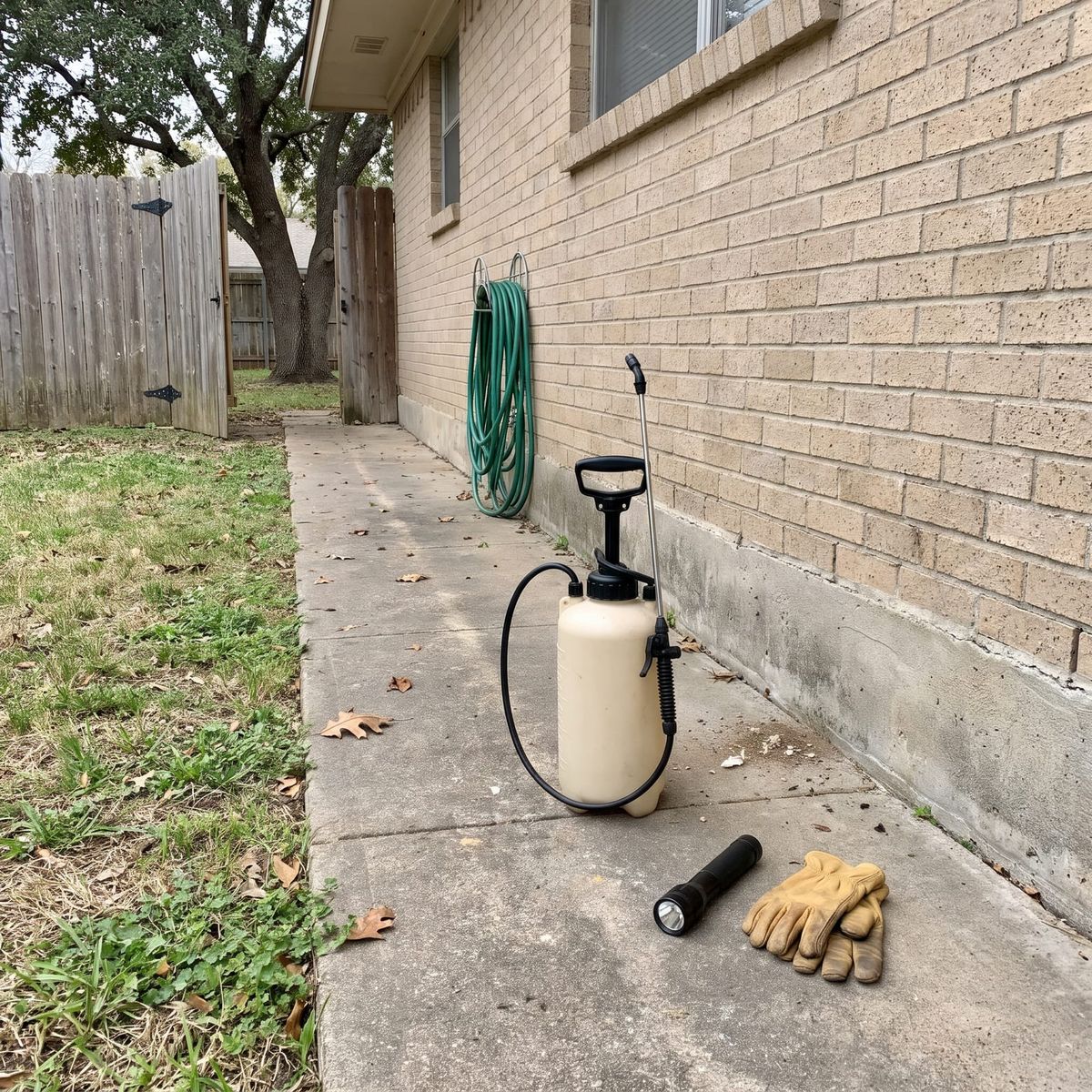
What We Look At for Each Pest
Termites
- Slab Edge and Garage Walls
Mud tubes and cracks, the crossing point from soil to house.
- Plumbing Walls
Damp wood and bath traps, where a way up stays out of sight.
- Trim and Window Sills
Hollow spots and shed wings, to judge how far it has gone.
- Wood on the Ground
Stumps, posts and mulch that a colony can feed on.
Roaches and Ants
- Kitchen and Bath Cabinets
Specks and egg cases mark where roaches hide by day.
- Drains and Pipe Openings
A dry trap or a gap is often the route from outside.
- Trails
Followed back, an ant line leads to its nest or its entry.
- Meter Boxes and Mulch
Moisture by the wall that keeps outdoor roaches close.
Rodents
- Attic Walls and Insulation
Droppings and runways give the kind of rodent and how busy it is.
- Roofline and Limbs
Gaps, rub marks, and any branch close enough to jump from.
- Vents and Line Sets
Loose screens and oversized holes go on the list to seal.
- Garage and Pantry
Chewed packages and nests, the food that holds them here.
Scorpions and Spiders
- Rock, Wood and Pavers
Daytime shelter, and the main reason they stay by the house.
- Garage Corners
Webs, egg sacs and shed skins tell the kinds apart.
- Weep Holes and Light Cans
Openings that line up with the rooms where they are seen.
- Porch Lights
The insects gathered there are what both of them eat.
Treatment Methods
| Method | Used for | Household precautions |
|---|---|---|
| Gel and granular bait | Roaches, ants and silverfish in cracks and cabinets | Leave it unwiped; keep sprays away from it |
| Interior spray along edges | Fleas, spiders and crawling insects | People and pets out of the room until it dries |
| Exterior perimeter treatment | Outdoor roaches, ants, scorpions and spiders | Pets indoors, toys picked up, sprinklers off for the day |
| Dust in voids | Wall spaces, weep holes and outlet boxes | Covers stay on; do not vacuum the opening |
| Traps and monitors | Rats, mice, and a count of insects | Keep hands and paws away; report a trap that has been set off |
| Locked bait stations | Rats and mice outdoors | Leave stations closed and where they were anchored |
| Soil treatment and ground stations | Subterranean termites | No digging along the treated strip |
| Sealing | Openings used by rodents, scorpions and roaches | Let sealant cure before painting or washing it |
Rules and Safety
In Texas, pest control in and around buildings falls under the Texas Department of Agriculture. Pesticides are applied by licensed applicators or by technicians working under one.
Every product is used as its label directs. The label names the pests and surfaces it may be used on, the protective gear for the person applying it, and how long people and pets stay away afterwards. A product that is safe in a wall void may not be allowed on a countertop, so the place matters as much as the pest.
The rules below are the ones a household is most likely to meet.
| Rule | What it means for you |
|---|---|
| The product label is law | It sets where a product may go, how much is used, and when a room can be used again. You can ask to read it. |
| Re-entry times | For most indoor sprays that means staying out until the surface is dry; some products call for longer. |
| Consumer information sheet | The state publishes a sheet on indoor treatment, with the number to call about a concern. |
| Notice in shared buildings | Workplaces and larger apartment buildings post a sign ahead of a planned indoor treatment. |
| Termite treatment papers | A termite proposal includes a diagram of the building that shows where treatment will go. |
| Rodent bait placement | Bait within reach of children, pets or wildlife has to sit in a tamper-resistant station. |
Preparing the Home
- Cover fish tanks and turn off their air pumps.
- Move pets out of the rooms to be treated, birds and reptiles included.
- Put away food, dishes, toothbrushes and baby things.
- Keep children away from treated floors and walls until they are dry.
After the Visit
Some activity for a week or two is normal while bait works and insects leave their hiding places. Note what you see and where. Fewer sightings in the same spot mean it is working; a new spot is worth a call. Recurring service looks at those same points on the next round, so a gap that opens again is caught.
Children, Pets and Treated Rooms
Are treatments safe around children and pets?
Products are chosen and placed so that children and pets do not come into contact with them, and the label’s directions are what make that hold. Say at the start if someone in the home is pregnant, has asthma, or crawls on the floor, so the plan can allow for it.
How long do we stay out of a treated room?
Until it is dry, at the least, and longer when the label says so. Open windows help. Ask for the time that applies to each room before the work starts.
What if a pet gets into bait?
Call your veterinarian with the name of the product, which is on the station or on your paperwork. Keep the packaging or a photo of the label to show them.